12.30.2006

Relocated Iverson: The Silverbird Sessions


One of the greatly underrated aspects of FreeDarko is the power of the collabo. You may only see the final product, but the process behind each post usually involves more than just the author's scalded noggin. Nowhere is this more true than when I write on something that might come up in casual conversation; about half of these come out of phone calls with the man known only as Silverbird 5000.

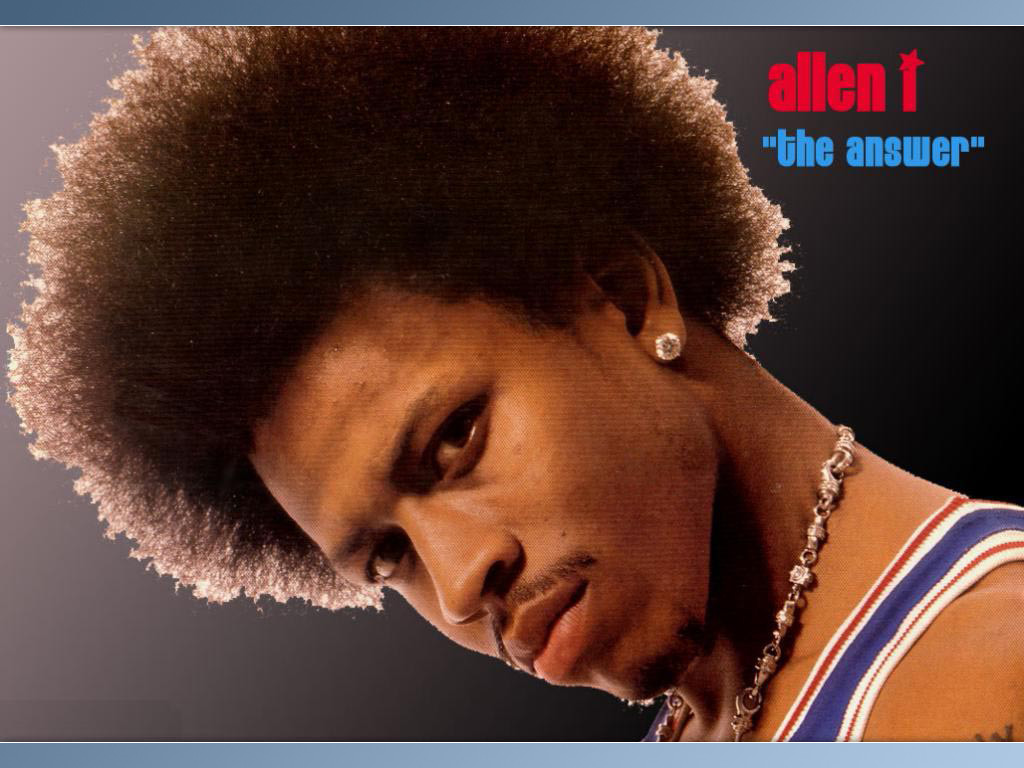
This post, however, is not an outpouring of affection. Instead, it's the pretext for some late thoughts on Iverson that happened now only because I hadn't talked to 5K in about a week. Once we worked through the latest run of natural disasters, talk turned to the new look (or for the moment, the no-look) Denver Nuggets. Both of us agreed that even this skeletal line-up was more fun to watch than the Sixers have been in ages, and that some pretty dim effigies had proven capable of running with The Answer. Sure, he had an off-night against NOOCH, resulting in an all-too-familair box score. But when Iverson has been on, the Nuggets' second-teamers have been right there with him.

The question, of course, was whether Iverson's changed, the change in team has been that drastic, or whether we're being treated to a first-blush illusion. Watching these Denver games, the thing I've become most aware of is how off-hand Iverson's passing is. Once the entire opposing defense has collapsed around, AI casually tosses the ball to any number of open men. They might be behind the three-point line, or under the basket, or in a position to drive; the important thing is that, with Iverson blanketed in chaotic activity, they should be able to get buckets. He doesn't set any one up, or guide them to the hoop, or even necessarily care who has the best shot. Iverson kills himself so that others might move forth simply. That's all he asks, and yet this places a tremendous burden on these teammates, who are almost dared to fuck up a no-brainer.

clipse2

While Iverson might have a little exultant bounce in his game than usual, he still looks like the same player to me. Those Nuggets aren't any better than this last batch of Sixers, so the talent theorem is out the window. We're left with two options: either Denver's style of play better suits AI, or there's something psychological going on with his new teammates. SB5000 was all for the former, but I still see it boiling down to one basic truth: when the Nuggets get the ball, they quite naturally take it and score.

I am never going to believe that Iverson is the perfect teammate. For the reasons mentioned above, he makes the gift of the open look into an ironic bind. It's not a stretch to suggest that this had become part of the Sixers' team culture, transmitted from roster to roster and persisting in spite of coaching changes. By the time Iguodala came aboard, this was not only the feel of the workplace—it was embossed with the lumber of immortality. Now undoubtedly, many of you are outraged at this claim. That's why I'm going to kick it over to El Birdo's ghost, who sharply asserts that these Nuggets are just not overwhelmed the way the Sixers were. They get the ball, they're open, and they go about their business. I don't necessarily think that Iverson means to intimidate his teammates, but he certainly puts them in intimidating situations, making what should be an act of cooperation into something almost antagonistic. Neither Silverbird nor myself anticipate this being an issue with Melo or J.R., and yet Iguodala has emerged as a force when paired with the slightly more sympathetic Andre Miller.

You might have a firm desire to kill me now, but I hereby defy you to come up with a more plausible explanation. Certainly Iverson was not blessed with the strongest of companions, and yet now he thrives with far less. He demonstrated little on-court rapport with his longtime boyz, and yet overnight gets a flow going in Denver. The only possible conclusion is this: Allen Iverson has had the good fortune to come to a team that is not, has not, and may never be, his. And therein lies his greatest chance of belonging.

12.28.2006

God: Friend or Foe?


For once, a Game of the Year I managed to watch. If you ever wondered what "competitive style" is, reference no further than Howard's UHHSD8A(*d98aiud1200uWHU of an and-1, or Amare's two cold, cold dunks of note. I'm now officially in the "he will yet return" camp, since Amare's clearly having pre-surgery moments. If he can find it on occasion, then it's just a matter of being that full-time. The 85% is certainly a quantitative, not qualitative, assessment.

The big news, though, has to be Sager's announcement that Amare will most likely have to undergo the same procedure in another few years. Owing, the doctors say, to his earth-turning style of play. In a way, this makes me even more excited about his comeback. It is truly God's will that he's returning to wow, a defiance of odds and past history that only divinity could decree. I guess you could blame the Lord for this cruel tease, or curse His Name for this second eventual death. Personally, I'm thinking it only enhances the cosmic implications of Amare's return. We've only disappeared his free will from the equation if you're disregarding his Christ complex; keep that in the picture and you're looking at a whole new, eternity-phobic theology.

It's also absolutely essential that we make Nash a part of this. If Nash happens to win a third MVP, he'll ascend to the pantheon on the strength of three seasons. Presumably, this second career will be defined by its terseness, its concentrated excellence. Like Amare, he'll have hit upon such a wondrous lode of accomplishment that no one expects it could continue indefinitely. No one wants to see an aged Amare; similarly, now Nash can't possibly go back to mere excellence. Both of these seem almost inconceivable, making a brief window the most perfect careers they could have. Remember, of course, that neither of them was supposed to be where they are, anyway. Amare should be finished, and Nash was an injury-prone system player approaching that age for point guards. It's borrowed time, but what a gift it is.


(Yeah, I said it. And if you insist: it becomes Dark Phoenix when Amare's fully back)

Some other notes:

-Did anyone else feel that Harris only turned it on once Barbosa left him guarding thin air? Like he's fine getting scored on all night until someone tries to make like he's the fast one. . . .

-Amare is the only player in the league who can make the a hostile crowd oooh and ahh. I wouldn't be surprised if they showed his replays, too.

-Josh Howard is All-Defense. Next stop, All-NBA.

-Is his nickname "Plastic Man" already? Would "Double-R" be too confusing?

-I have mixed feelings about Iverson and like James Brown the way I like the Beatles, but an AI montage over "Superbad" is the best tribute to either of them I've seen this month.

-Read everything else I wrote today.

Generally, I Love Thee


Merry Christmas. The holiday spirit replaced my brain with a plutonium yam, hence the less-than-careful tone of this Marxist plank. In the spirit of the oncoming New Year and the academic thingy I really should be working on, I'd like to present to you a slightly amended version of this same argument. And no, I have no plan to slow this pace until I have something better to do.

I have peculiar reasons for liking basketall. While I don't think these necessarily translate well into universal terms, they are a function of each and every sport's uniqueness. I am not wholly averse to fans of multiple leagues—hell, even I watch football until the NBA awakens—but am suspicious of any attempt to conflate all professional athletes as one. We see this will dramatically not being done with regard to fighting in the major sports, and yet it's an absolute staple of brain-empty fandom. Certainly there are many Americans capable of appreciating a multitude of organized competitions, some of whom might not even have their own blogs. I would submit, however, that those who don't do so with any subtlety are engaged in a wholly narcissitic exercise, often driven by nothing more than territorial loyalty.

Most athletes are fans of sports other than their own. But to give one's very soul over to a game requires a higher degree of identification, which is exactly the exchange I sought to map out in the offendng post. Ironically, it is the leisurely American pursuit of every after-school league that reinforces the brainless omni-sport consumer. Just as all sports were/are pastimes he/she undertook in the pursuit of fitness and ego, so their professional manifestations are performative wars for his Sunday well-being. This is not unlike the shallowness that dogs the careers of the few true multi-sport pros, as opposed to the single-minded devotion we see in players who have emphatically chosen one sport over another.

So I apologize if anyone believe I was forbidding them their baseball. That was never my intention, and I applaud all humans gracious enough to find the true value in all things.

Cleansed FD Dreams


Allow me to drag you back from the precipice with something radiantly concrete. This past Tuesday, I had the good sense to watch Gerald Wallace take on the Dallas Mavericks in-person. Josh Howard positively sparkled, inching ever closer to becoming the league's most unlikely "unstoppable" player, the rest of the Mavs phoned it in, and the Bobcats were vivisected anyway. Save for one buoyant alley-oop, the Big GW was all but absent from the game. Fast forward to last night, when I finish my drive home, absent-mindedly flip on League Pass, and am confronted with the early birthday present of a Wallace/Arenas murderfest. Looking every bit like the player I've always imagined him to be, Multiplicity pulls a mini-Stoudemire in the paint and ends up with 40 points, 14 boards, 6 steals and 4 blocks. I watched the entire second half and can personally guarantee that his performance smelled just like that line.

Anyone who has read this site for more than fifteen minutes knows of my sterling fascination with Gerald Wallace. With Arenas now the darling of the blogosphere, and J.R. Smith about to be the most inflammatory three-point specialist since Craig Hodges, Wallace is the last of my cult favorites who still frolics within shade's boundaries. Sadly, most of this season has been a lost one for him, as he's struggled to find a place for himself within that increasingly crowded, but no less feckless, Bobcats gameplan. Because no one wants or needs to hear me drive verbal stakes through the limbs of Adam Morrison, suffice it to say that Charlotte does nothing to accommodate or facilitate Wallace's big-man-inside-a-small-man game. This, of course, is a shame, since he and Felton are the only two offensive factors any opposing team is the least bit concerned about. Seems to me that, any time you have a guy capable of generating that many scores, there should be some attempt made to run plays for him.


But based on two contrasting nights worth of data, I can also safely say that Wallace is only as useful as he is engaged. Against Dallas, he was guarded by Howard, the lane was unyielding, and he was often handling the ball at the top of the key. And when he drifts away from his bread and butter of narrow drives, reverses, and putbacks, his brain dissipates, too. When Wallace is forced to "settle" or adapt, he ceases to exist as a basketball-playing entity. To call him limited, flawed or non-committal totally misses the point: like few figures in this league, Wallace is an all-or-nothing phenomenon. Give him an inch and he's a star; force his hand and there's no struggle, no conflict, just plain old mediocrity. Hampered centers still tower and reach; diminished guards continue to gleam with appetite. Wallace, though, seems perfectly content to shoot rarely and stick his man dutifully unless he sees that light. And then, only with a surge in offense does he start acting like the defensive juggernaut his stats describe.

I'm not trying to attribute any great psychological complex to Wallace. If I knew a fucking thing about basketball, I would probably have available to me a fairly simple technical explanation for this. Yet as long as I remain stranded on my flat, burning yacht, I'll hold that Gerald Wallace's vast potential and occasional outsized showings are only heightened by this quirk. It reminds me of the story I once heard of a man whose brain alternated between genius level intelligence and retardation. When a series of tests were administered to him at regular intervals, the results made it appear as if two grossly dissimilar minds were switching places with each change in section. The contrast between the Wallace I saw this past night and the slackened mass that wore #3 at American Airlines Arena was absolute. This was Clark Kent and Superman, if Clark Kent lived in a shoebox and wrestled with snails, or The Hulk and Bruce Banner, were Banner's insides made of cheese and reckless surgery. Except in Wallace, the weaker of the two faces does not establish his humanity—rather, it only heightens his superhumanity.

12.25.2006

Against the Endless Maze of Sport


Some months back, I did a post explaining why Townes Van Zandt is not basketball. No one seemed to care at the time, and I nearly retired over the silence; unbeknowst to all, I was actually attempting to explain what the NBA means to me. In retrospect, what I probably should've done is explain why I would expect TVZ to be basketball, since therein lay the highly personal dimension of the argument.

Fast forward to the day we call now, where I'm cold at year's end and half-assedly taking stock of my life's work. Away from cable since Friday, I've witnessed precious little basketball and been thinking about the sport even more abstractly than usual. You've heard the FD standpoint repeated like a saline mess: stars, style, psychology, and whatever else sounds angry. All involved frequently think of this as a particular kind of fandom; myself and Silverbird coined the term "liberated fandom," a fascination as passionate as the homer but as free to range as a "student of the game."

Yet a few days ago, Joey of Straight Bangin' fame uttered the following quote in a Gmail chat:

"It's hard for me to even explain my NBA and basketball passion at this point. It just seems to be an organic extension of my life in a way that other sports just aren't."

Bingo indeed. For as much as I consider myself relatively aware of other sports, I can't really say they beckon me in quite the same way. Whatever draws me to the NBA has nothing to do with some generalized category of "athletics enthusiast;" in fact, I have no belief whatsoever in the endless maze of sport upon which ESPN is premised. Last I checked, all this great games of our race were different and special in their own way. While the competitive impulse may reside in us all, and the human will finds satisfaction in physical exertion, a sport is more than the sum of its parameters. Each exists as its own culture, and whatever overlap there is must be viewed as accidental. Anyone who participates in multiple sports is not a renaissance man—he is a being without a home.


What might upset some people about this line of reasoning is the American invention of ur-sport. From the child enlisted in year-round competition as a rite of passage, to the college allegiance that makes for instant fandom, we're trained to believe that all sports belong to us equally. Since I've already set some hairs 'a bristlin', I'll go one step further: this sports dilletantism is a function of affluence and prosperity. Maybe you know this, but soccer and basketball require little equipment and organization, whereas resources are required to stage, and often participate in, a game of football, baseball, or hockey. With privilege comes non-determination and a view of sports that reflects this, from the participation of youth up through the spectatorship of adulthood.

If all sports are from a common essence, than the men and women who play them are distinguished only by physical attributes. Rarely are we encouraged to consider what a difference there must be between a person who loves the game of basketball and one who feels himself most perfectly realized thrugh football. Case in point: LeBron could be in the NFL right now, but he's opted for the NBA. What led him in that direction? Is it a coincidence that T-Mac, one of the Association's great daydreamers, has made public a fervent desire to go MLB? While often size and strength make this decision (see Gates, Antonio or Peppers, Julius), these athletes have within them an unmistakable affinity for one game. Or at very least, they draw on different parts of themselves.


In ignoring this, however, we leave ourselves only the option of dehumanizing them. Either they are sub-human dimensions and digits, or they are inhuman gods who embody the most noble properties of the sport's culture. What I fuss over, though, is something in between, a grey area that reader Ben F. described as "not complex enough to be real and yet definitely complex enough as to descend from a level of perfection." I never think for a second I will know athletes as real people, but I insist that in their accomplishments we see the harmonious interaction of a particular person and a particular form of competition.

What is FreeDarko? At least for me, it's my relationship with a sport that I feel uniquely compelled to follow. I'm not saying I'm suited to play it, or that I have anything in common with those who do. But in the same way that they intentionally inhabit the basketball universe, I swear by the NBA because of who I am. FreeDarko is more than a mere stunt because, like those players, I think there's a place for me in it.

12.24.2006

Deep Inside His Unclenched Eyes


Imperials ups to Kaifa, who has brought to our attention this fantastic Le Batard Q&A with Kobe. Haven't decided yet if it radically alters my view of the man, or if I want to gloat about how right I've been on his ravaged complexity. For now though, read it good, write about it, and I may or may not deliver an opus when the pagans subside.

Now back to playing hall monitor for a race war.

Addendum: I still desperately want to watch Suns/Wiz, ideally before Suns/Nuggets. I've been offered a VHS copy, and am grateful, but can anyone come through with the digital footage for me? Holiday aside, my birthday is in a week; never was there a better time to lend me a hand. Be warned, I may otherwise be overwhelmed with yearning and lock myself in the bathroom if nothing suitable transpires!!!!

12.23.2006

If There's Branches, Smell Poison


By all genetically pre-disposed counts, I shouldn't have missed last night's punch-off. I don't want to shout "race traitor" at the mirror, if only because I hate to think that the People of Israel were put on this earth solely to watch Wizards/Suns in the Year 70045763. Yet if there are two things that verily define me as a cloud upon dirt, it's those two impregnable obligations. That said, the prig bubbling of the U.S. cultural cauldron and the deepest echoes of love can undermine a lot, and so I write this morning a man filled with loss.

When I think for a split second, however, I realize that I'm more guilt-ridden over this than actually upset. I should have been watching this game and scanning Chinese take-out menus, but really, I'm not all that bent up about it. While perhaps I am contriving excuses for my own self-deceit, without pause I bring you TWO MAJOR REASONS WHY MY LIFE MIGHT GO ON:

Stakes is grim: I have on countless occasions endroses the NBA-game-as-free-flowing-narrative, the NFL Films shtick done for the Russian lit set. And while it's true that this incalcuable ebb and slow of significance saves us from easy "good guy/bad guy," "triumph/tragedy" polarizations, still fate's surgery is done and judgment's ax falls. And despite what some of my best friends and most virulent foes might say, I do get enthralled by tactile possibility of victory and sorrow, especially when I particuarly care for one team. With that in mind, please know once more how dear these two particular rosters are to me. It would've been impossible for me to take sides, thus no joy; and all pain would've been personal, so no dance of decay. I would have had no choice but to wax objective, and once that begins, the sport is mute to me.


Today, I plan to watch the event on Broadband. It will be difference between home movies of your bar mitzvah and sweating through the real thing; there is pride, but at best there is the absence of others' disappointment. Now knowing that it was a game for the ages, that both teams shed magma and reinforced my best version of them, will I be able to enjoy it for its virtues. No Suns runaway, no Gilbert slump, no late collapse by anyone. The outcome was a necessary evil, one that I would prefer to not be preoccupied with. Did I mention that I'm Jewish? I feel the same way about Larry David, incidentally; only on the second or third viewing can I actuall enjoy an episode with feeling myself sent to hell in the process.

The Eternal Eye: I stand by my claim that a basketball game must be watched in full. Even if, despite my party line, I find myself increasingly having to watch the first half with one eye on the laptop. Such is price of constant required viewing. Yet I find some strange dignity in having seen none of such a pivotal contest, and still being able to feel as if I've sensed the whole thing. Not to fete my own canary, but I pay attention to the NBA. I know the players, and as much about their respective games as I care to. When you dial up the Suns and Wizards, two teams I watch with religius precision and who fail to stand in the way of their opponents, it's pretty much just a matter of their offenses functioning full-tilt. And in some ways, then it's all about iterations of style, styles I know like the ruts in my muscles. I once mocked Silverbird for "watching" Sunday night NFL action via Stat Tracker. But now, having followed the fourth quarter and OT of Suns/Wizards this way, I can at least say I understand why it might count.


Some non-related drool: This Christmas season, I've been thinking a lot about draft picks. It had something to do with the Recluse's wail upon Cleveland, but it's also just one of those things I take time to ponder during the holidays. I know that drafting is an inexact art--fuck a science. And that free agent transaction, while they deal with known quantities, can backfire in unexpected ways. But rather than executives embracing/falling back on these inherent ambiguities, it seems like there should be some responsible way of evaluating them based on how well they tend to judge these things.

Last night, I listened to this story on an NPR food podcast about a "super-taster," some Mexican guy who discovered he had the freakishly enhanced taste receptors needed to determine what caviar is worth $4,000 a tin. Because basketball poetically defies logic in a way that baseball can only dream of, this stats revolution is a charade. Personally, I believe it's a ploy to attract academics to the sport; whatever it's shadowy purpose, no way in France will it help the Rockets figure out in what settings Rafer Alston can optimize his output. The same goes for scouting; the combine more often than not just validates false prophets and leads to recurrent heartbreak when teams buy into its discourse. Isiah can't sign free agents worth a damn, but is obviously one of the more shrewd evaluators of pre-NBA talent this side of the Nelson family. Why not set him up in a position doing that and only that, acknowledging his one-dimensional expertise and accepting his incompetence in the other department?


When a GM reliably fucks up one of those tasks, he should be off that case; if he’s a mess at both, he damn well better be good at recruiting and managing scouts who are. Front offices who consistently luck out with either of these two tendrils of evaluation should be getting their ranks raided daily; the Cavs have no excuse to butcher a decade’s worth of picks when they could hire away rising stars from the Pistons or the Spurs. Shit, wasn’t this strategy how (and why) Jon Gruden ended up with a chance to win a Super Bowl?

For all my Pistons faithful. My plan to gift Gilbert a nickname has obviously failed, but here's a less ambituous one: Jason Maxiell, though shalt be J-MAX till the doom.

12.21.2006

Widening the Waters

This post is supposed to be the first of two concerning some of the social implications of David Stern’s recent and controversial impositions on the league, beginning with a long overdue look at the age limit and ultimately ending with an examination of the new technical foul guidelines.
I imagine that I am not unique for having spent a sizable portion of my childhood alone on the blacktop, oscillating between attempting to improve my game and imagining the future NBA glory that awaited me. Acting as both announcer and star, I narrated myself hitting game winning shot after shot over the outstretched arms of scores of beleaguered defenders.

Like a toddler declaring he wants to be a horse when he grows up, my own hoop dreams were equally unrealistic. Of course, no one ever told me, and no one ever should have. Regardless of how those daydreaming afternoons planted seeds of self-discipline and love of the sport, regardless of the demonstrated cognitive developmental benefits of engaging in pretend play as a preadolescent, regardless of basketball unshackling me from the television, there is simply no moral justification for crushing the hopes and dreams of a child.


For a long time, I remained unequivocally faithful to this simple axiom while I taught at one of the poorest schools in Mississippi (which, not surprisingly, was 100% black). When one of my 7th grade students would boast about his envisioned dominance on the hardwood, and all the money and notoriety that would follow, I could never tell him to find a new dream, I could only tell him that for now, he was stuck with me as his David Stern.

Orlando Johnson was one of my best and favorite students in 2004. Despite a father absent since birth, and a mother bouncing between jail and rehab, Orlando managed to raise his younger sister, earn excellent grades, and start as point guard for our middle school team. While blessed with quickness, coordination, and a strong work ethic, Orlando should consider himself lucky to ever top 5’7”. One evening, we stayed after practice to work on shooting mechanics before I gave him a ride home. During the drive, we chatted about his grades, his home life, and the NBA.

Our conversation lulled briefly and enabled Orlando to make what sounded almost like a pained confession. “You know what,” he told me, “I think I might have to go college before I can jump to the pros. I just don’t see my game being good enough by the time I finish high school.” That one of my most gifted and hard working students felt resigned to go to college shocked me. To him, an admission of collegiate aspirations revealed some kind of weakness within him, in the domain in his life with which he most strongly identified.
For so many of the kids I taught, dreams of basketball and dreams of college were mutually exclusive. For those convinced that a life of fame and wealth on the court awaited them, seeking higher education was construed at best, as irrelevant, and at worst, as an indication that they had failed in their quest to reach the league as soon as possible. I’m not sure that any amount of rational discourse might have persuaded these kids to find an alternate dream, and maybe the fact that I couldn’t bring myself to try indicated a failing on my part as well, but dreams of future success didn’t vary much in Indianola, Mississippi; almost no 7th grade boy aspires to be a young black doctor, lawyer, or entrepreneur because he’s never seen one and has been inundated with subtle and overt cues, practically from birth, that he can never become one.

I don’t mean to sound too melodramatic. For almost everyone, hoop dreams degenerate into painful hoop realities sometime around 9th grade at the latest. But for a kid born into poverty and a dysfunctional public education system, high school is often too late to decide that college may be for him after all. That college aspirations must come as early as 5th grade is a mantra adopted by nearly all of the most successful charter schools that specialize in educating low income minority students. Many of my 7th graders began the year three or four grade levels behind in math and reading and with little reason to see any value in investing time and energy into a system that had so consistently marginalized them and let them down.

The implementation of the age limit will not close the achievement gap. It won’t force books into the hands of inner city youth and supplies into their classrooms. But it will enable teachers and parents to tell their budding 7th grade superstar of the future that the road to the NBA runs through college. How can a 7th grader who knows he needs to go to college not be better off than a 7th grader who thinks college is for failures?

Some may argue that the collegiate experience envisioned by these 7th graders may be little more than skipping classes, ruling campus, and partying. However, nearly all of these kids won’t attend school to play ball, and have six years to recognize that a diploma may be their best tool for escaping poverty.

Countless athletes and writers have pointed out that the NBA’s age limit unfairly singles out young black men. It restricts them from earning a living playing basketball, despite the fact that dozens of other players have demonstrated they can excel in the league and contribute to it both as players and citizens. The age limit has been branded as “racist” and “unconstitutional.” The validity of some of these arguments cannot be refuted, but I don’t care. That six or seven preternaturally gifted high school kids must wait an extra year before they can begin their newfound life of opulence could not be any more overshadowed by the paradigm shift in mentality of thousands of young men who now must accept that college needs to be part of their future.
David Stern stuck to defending the age limit in strictly financial terms. He spoke of protecting the investments of the owners, and of using college basketball as a means of making his players famous before they even enter the league. I’m inclined to think that David Stern’s social conscious may have also informed this decision; I suspect he recognizes the tremendous impact that the NBA has on low income black communities and, without delving too deeply into a psychological profile of the man, that he feels responsible for helping the communities that pump so much lifeblood into his league (see his more than $800,000 contributed to Democratic candidates [an obviously debatable piece of evidence] and his description in David Halberstam’s Playing for Keeps). Maybe he sees himself as a modern day Andrew Carnegie, maybe he’s afflicted with Alexander Portnoy’s stereotypical Jewish guilt-complex (which often manages to manifest itself paternalistically).

Yet Stern’s justification for the age limit need not be considered; motivation and consequence usually dine separately. While measuring the social impact of the rule may prove impossible, every dollar or hour of time donated and every gesture or policy that helps people still does just that. Given the tremendous impact that the sport has on so many people, sometimes it’s important to remember that basketball is all about more than basketball.

12.19.2006

Burning on Empty

Bush Hurricane Help

"Fuck AI. Fuck the brawl. We need to get back to basics." -Dr. LIC

Thanks to Andrew for the heads up on this lasting image.

And So the Story Goes


A chapter in our life together has lost its mortal crown. Iverson's Denver-bound, and so endeth one of the most tense trade watches ever. My initial thought was that Denver clearly does not give a fuck about this new thug-ball tag; Iverson may be grossly misinterpreted, but he's still the NBA's lifeline to the streets. Some ruffled hotheads might see this as the Nuggets even further showing their true colors, the nail in the franchise's splintering PR coffin. I think that the sheer star power of Melo and Iverson together will entrance all but the most clueless "fans," proving yet again that greatness trumps pettiness (see Bryant, Kobe). Or, if you want to be ultra-cynical about it, this is such a colossal mind-fuck that it hinders any post-brawl attempts to hate. And it's not just for the Nuggets. This experiment—believe, it is very much that—has displaced the negativity with a bough of fantasy.

I'm not sure I see this as a frantic gamble. During the Melo era, the Nuggets have reliably stunk until the All-Star break, only to go on a run, enter the playoffs aflame, and then crumble when they can no longer rely on momentum alone. As has been said in the comments section, there's no precedent for Anthony's suspension; kindly heed Craig's theory that this could be Stern's way of saving face without shelving one of his biggest attractions. If the Nuggets are going to make any progress in the post-season, they either need more momentum or have to develop an alternative strategy. Enter AI, who can either push their break up to Suns-like majesty or add a booming new mechanism to their haggard half-court. Whether he's dominating the ball or penetrating to kick out, AI can do everything Andre Miller tried to but on a HOF level.

Before we get to the all-important quesion of how two 30 ppg scorers exists, read aloud the names of the Nuggets' roster:

Allen Iverson
Carmelo Anthony
J.R. Smith
Marcus Camby
Nene
Earl Boykins
and honorary participant Kenyon Martin.

In a very objective, unremarkable way, that team is fucking insane, bananas, bonkers, however you like to call it. There is absolutely no way that, once everyone's on hand, this doesn't rival the Suns for must-watchitude. Swagger out of this world.


Now on to the bind. It might seem foolhardy to try and play the league's two leading offensive producers in the same five-man unit. Shoefly's right that this is Iverson's chance for redemption. And part of me firmly believes that his underdog complex will kick in when he realizes that this is his legacy right here. Not sure if he can make it work, but I can't imagine he won't be trying to silence the jackals. If AI and Melo can happily co-exist, at least part of his grating stigma is cast aside. Maybe he can't fabricate talent as Nash does, but he'll at least prove that he can look past himself in a non-exhibition setting.

Realistically, though, Iverson will be Iverson, and it will be up to Melo to accomodate this unstoppable force. The spike in Anthony's scoring is not evidence of a newfound selfishness. In fact, it reflects the strides he's made in his game: shooting smarter, missing less, and just generally looking like more of a studied expert. He wastes little, and gets the most out of each and every motion. His aggression and confidence have increased with this focus, and now draw their weight from the dignity of his craft. Weird as it sound, Melo has matured into the kind of player who could be productive as a second option, as opposed to the volume shooter he often resembled earlier in his career.

It's in Melo's game to make this work, but will his personality allow it? Get ready, please, for shouts of THE NEW FALLEN MELO IS TOO MUCH OF A BRAT TO EVER GIVE UP THE SPOTLIGHT. And then tell all those people to go over here, where I outline the relationship between Melo and his spiritual predecessor. You really think he grew up wanting to be like Mike? Have you ever looked at Carmelo Anthony? I personally guarantee you that Anthony will defer to his demographic's Jordan, especially since this is not an indefinite arrangment. If this means taking a back seat, I'll be disappointed. However, if AI and Melo can establish some chemistry without either man compromising himself, this could be a team for the ages.

glennthp

Oh, and one more Shoefly remark to address: yes, I would've rather seen him with Garnett. But what would be more disheartening than three years of that duo failing to get past the first round.

UPDATE: FanHouse Iverson roundtable, featuring MJD, Mutoni, The Big Lead, and myself. We were all wearing suits, I think.

12.18.2006

New Steamed Regard


We've told you that THIS IS A LEAGUE OF STARS, so of course the Gilbert/Kobe fireball is tops on our reflective agenda. You also might have heard that THIS IS A LEAGUE OF PSYCHOLOGY, which is why I found myself entranced by Kobe's post-game reaction:

"You tip your hat and say, 'See you next time,'" [Bryant] said. "I don't think he has a conscience. I really don't. He was chucking out there. He took some horrible shots and he made some big ones. I don't get a chance to play him much. I'll be ready next time."

As Brett's noted, there's a surface irony to Kobe questioning anyone else's "conscience." This supposes, however, that it was intended as a swipe at Gil. I think we can all agree that part of what makes Arenas such a joy to watch is that he does lack a basketball conscience. But rather than come off as stubborn or malicious, it's responsible for his rapturous innocence. If Gilbert sometimes make counterintuitive or downright stupid choices on the court, it's not because he's a rebel or an uncoachable cur; that's not him, and anyone with an internet knows this. It's borderline racist to talk about "instinctual basketball," but Arenas really seems to play best when channeling some as-of-yet-unknown hoops muse. It's not the hedonism of id-driven slop, since there's certainly some kind of logic to his play. That Gil travels this wobbly path without hesitation is, without a doubt, the mark of man secure in his ego.

Kobe, on the other hand, has tailored his bones and blood to the structure of the sport. He may frequently flout basketball logic, but even his decadence stinks of rigor. Often, I find myself wondering if Kobe doesn't force the issue only because he feels himself the most basketball human being in existence. My standard LeBron spiel goes something like this: King James has within him the ability to alter the essence of the game on a whim. Then there's Kobe, who has so internalized basketball as we know it, all decades and decades of it, that he flexes its soul with every second he moves. His arrogance, inexcusable as it is, draws its strength from this indentification with the game itself, making him nothing less than the embodiment of the basketball super-ego.

183582675_a1e31aaafc

Since I've already dipped into my dime-store Freud bag, I'll spare you the pat Nietzche reference. But in Kobe's comment, I see nothing less than a confrontation with the unknown and possibly unknowable, the absolute antithesis of his raison de baskebtall. That Arenas won the duel is significant, since it forces Bryant to acknowledge him as a peer; Dr. LIC saw condescension in the excess of pronouns, while I feel the shiver of cautionary distance. You got the sense that Kobe had met his babbling, foreign match, that at least for one night, Arenas's mastery of the game surpassd that of Kobe. Were Gilbert a mere gunner, this would be a fluke. Given the heavenly way of Arenas, this represents an ideological shock to Bryant's system.

And so it occurs to Kobe: could one exist without a conscience-driven basketball mind? He sees Arenas play free, loose, and unencumbered, and must accept his legitimacy. Maybe he's stuck on processing this for the rematch, or maybe, just maybe, he wonders if it might be of some use to him.

baby-bunny

NOTE THAT DOUBLES AS MY POST HERE ON THE BRAWL: No Mas with an interesting observation/bit of information.

12.16.2006

Burning the Anchor


Without delving into the delicate matter of our mystery Slate author, I want to share with you a few of my Iverson belongings. I can understand why some might find FD Iverson ambivalence almost inconceivable; in truth, there are several among our ranks who take AI to be the alph and omega of stylistic revelation. But there is an equally loud faction that sees in him something that puts our entire project at risk. I will call upon a workplace metaphor to steady my hand: a laidback office is a delicate balance, and if one employee routinely flaunts his laziness the forces that be will be forced to crack down.

So it could be said to be with AI. We've gone to great pains to point out that, in theory, FreeDarko doesn't mere mean style; as our magnum breakthrough so loudly stated, we're into competitive, functional style. There are many ways to play the game, and all solutions to the problem of basketball involve are technically their own kind of style. The more self-possessed, self-aware, and aestheticized this style is, the more it resembles what we understand as style proper. Of course, the terror enters the room when we're lumped in with the Iverson Era—even when, as we've said on numerous occasions, this blog came into being as a direct result of the 2003 Draft and the 2004-2005 Revolution.

At least to me, Iverson threatens to destroy everythng I hold dear. The Sixers didn't give him anything to work with, but Iverson's way of playing the game does seemingly preclude the presence of others. And like it or not, his style is over-aestheticized, a self-contained spiral of invention that almost snobbishly excludes other voices. Doubtlessly, this was an essential moment in NBA history, the dialectic something or other that followed the so-called Golden Age. And verily, this league is all the better for Iverson having loomed like he did. At present, however, I worry that allying one's self with Iverson threatens to taint, say, Arenas, who has tried to iron the flaws out of a Iverson-style game while retaining its sting. The Answer made him possible, but it's also important to stress how Gil has diverted from his (admittedly brilliant) example.


Politically and culturally though, I can't front on Iverson in the least. In the same way that I think Tupac's music is retarded, my mixed feelings about Iverson's play don't diminish my respect for his larger significance. In this sense, Melo's emerging legend is endlessly and unconditionally indebted to AI; on the court, Anthony never ran the risk of falling into the Iverson trap. Even when he did look like a gunner, it was a less apocalyptic kind of presence. When it comes to making a street-as-fuck background part of the basketball establishment, though, Melo wouldn't have a leg to stand on without Iverson. Iverson may have been too raw, but he also forced the world to recognize the real. Now that his mark has been made, the establishment has no choice but to let Melo be Melo, rather than try and assimilate him.

Maybe that's not such a different argument from the Iverson/Gilbert dynamic. Except there's no reason to apologize or make excuses for who Iverson is, no way that you'd say Melo has improved on that identity. In both senses, Iverson is a pioneer, but only off-the-court are his lessons lasting. To me, this is how you honor AI while acknowledging his problematics.

12.15.2006

Blizzard


As we take you into the weekend with around-the-clock Iverson trade-watch coverage, we must point you to a very important piece on Slate.com, about Iverson's self-contradiction, written one of our very own, Nathaniel Friedman. At this point, I am hoping the whole saga ends as soon as possible. Just as Ron Artest paralyzed the league last year, Iverson is having the same effect. Perhaps this is where basketball, as dominated by the individual, is at its worst. Stern is seen as powerless to players' demands, Philly fans suffer either way. Billy King is revealed as a moron, other GM's are as well for not being able to get a deal done. Webber is again a goat. Larry Brown and Chris Ford's names get dug out from the trash.

Yet, the situation also shows the power of a single figurehead--A.I. is bigger than the NBA.

In other news, we feel it our duty to alert you to the recent whereabouts of one of our elusive O.G. hoops-blog brethren. A.K.A. SEARCHING FOR CHAUNCEY BILLUPS. That's right, we have stumbled upon a new realm of Chauncey's amazing blog-talents, which can be viewed in all its genius, here. As the blog exists with no links to or from it, we are not sure if we are fulfilling his wishes by sending the link out, but as Chauncey was a godfather to our whole steez and an inspiration to many of our readers, we felt such a move was necessary. Eight steps deeper into the Freedarko psyche: After a three-year lapse in communication, it was in the comments section of Chauncey's blog that Bethlehem Shoals and I reconnected, sparking a collaboration that has continued on a crooked and landmine-ridden path.


Finally, with all the hype about this whole Heizman dance business, I would like to present the first installment in "Freedarko imitates art imitates life." As you can see, the entire Heizman Dance phenomenon was prognosticated by the famous Dr. LIC vs. Noixe debates in the comments section of this post. To quote Noixe (aka Noixetradamus):

i meant because there's no context. they would look stupid shooting air fadeaways if it weren't for capo. if he did a track called "desmond howard" everyone would be doin this. [youtube video of desmond howard doing the heisman pose]


12.14.2006

Forget the question

By now, the buzz has already hit the streets of Miami. Riley wants Iverson. Pocket sports jocks all had an opinion.

Do you think this man cares?


First off, not a mention of not needing to tinker. Everyone thought it premature to do it last year, and we all saw how well that turned out for the Heat.

Others question trading Dorell Wright. Many call it a pipe-dream. Same fools who carooned Caron Butler as too costly for Shaq, or felt that Riley didn't have enough to get Alonzo Mourning, Tim Hardaway, and the Big Fella.

By now, we should all realize that if Riley manages to somehow rob/invade the Sixers of Iverson for a Doggie Bag, you can finally plant him gloriously at the apex of Basketball executives in the modern area. No one has been able acquire as many HOFers for peanuts. Is it going to happen? Who are we to question whether Riley can get the Sixers to pull the trigger.

He’s already courting the Answer. Riles is making his hard-on for AI well known, and with funnels like Stephen A. Smith around to convert news into reality, it isn’t out of the question that one of the spare, used parts of the Heat championship roster can go north to toil for Mo Cheeks. You don’t want to have AI moody.

But this isn’t about Riley. Or if this trade is going down, which it certainly could be.

No, this has vast implications that could result in a titanic shift in where we focus our passion for style.


Watch the Suns. They look like a slew of well oiled athletes that do a good job of working in unison, and marching/pacing along together.

Who else do you love? Before long people are going to be clammoring about the Knicks and how well they rebound.

D-Wade, AI and the Diesel could form a roster considered one of the most compelling in the history of basketball. MJ, Pippen and Rodman are no comparison... neither the tree men of 80s Celtics, 8 wonders of 60s Celtics and the excess of Showtime compares.

How Iverson potentially plays with Wade, Shaq and the 11 year old kid from Notre Dame should leave us all in agape wonder. Does that mean you want the trade to happen? It’s a bright thought outside an otherwise morbid story that is more disappointing than the Artest fiasco.


Get past the resentment of last year’s finals. Hold the idea in your heart for a moment and wonder watching bruising style in form. Shaq is on worn treads, but still commands the post. Wade apparently is both invisible and able to fly - and we all know what AI brings. Beat him with wooden bats and he’ll still sink a dagger from long range. The purest heart of a Champion and a guard who we hope should never stop playing..

I wanted to see him with KG and the Wolves. The Nuggets seems like a waste of time. I’m not that greedy to wish him for Miami, but know that the implications will make me recoil and redirect my focus even in the uncaring afterglow of the title run.

It might be time to pony up and finish planning the tattoo of Riles’ book cover for the small of my back. The man will deserve a fancy tramp stamp if he delivers again.

12.13.2006

Searching for Luke Jackson


The other day, I was ruminating about how quickly the talk about your '06-'07 Cleveland Cavaliers has gone from potential championship team to a supporting cast so shit awful (there's your "for mature audiences", New York Times!!) people are saying Lebron has already packed it in for the season. Or at least that he's coasting until the playoffs. In the East, it's looking like you don't even have to have a winning record to make the Final 8, so maybe he's just being shrewd. At any rate, the fact remains that the rest of the Cavs, save for the oft-injured Larry Hughes, pretty much suck. Donyell and Big Z are finally starting to play as old as they look, I'm not buying whatever Anderson Varejao is selling, and Drew Gooden's got ADD.


When you think about it, it's pretty astounding that the Cavs have such a dearth of talent, considering that they've picked in the Lottery more often than not over the last decade. An examination of the Cavs' draft history reveals more mistakes than the Bush Administration has made in Iraq. The agony starts in 1999, when Cleveland inexplicably selected a slow-footed 6-2 shooting guard with no handle ahead of Ron Artest and the chiseled Corey Maggette (about whom ESPN announcer Larry Beil once said, "When I die and am reincarnated, I want to come back as Corey Maggette's body"). Two years later, they took the Sengalese Shaq, Desagana Diop, at Number 8 overall, ahead of Joe Johnson, Richard Jefferson, Zach Randolph, and Tony Parker. It pains me to even speak the name of the cursed Dejuan Wagner, but it must be mentioned that he went to the Cavs sixth overall in 2002, ahead of Amare and Caron Butler.

After finally hitting the jackpot with Lebron in 2003, the Cavs were sitting pretty at the ten spot in 2004, with a good chance of getting some serious support for the Golden Child. They selected, out of the University of Oregon, Luke Jackson, the living embodiment of the hopes and dreams of frat boy intramural squad players the world over. To put it in perspective, Jackson went just after Andre Iguodala and before the suddenly productive Andris Biedrins, manchild Al Jefferson, and BOTH Smiths. At the time, it honestly didn't seem like that bad of a pick. The conventional wisdom was that Lebron needed to be paired with a long range threat, and L-Jax definitely had demonstrable range. Also, he tested out at the pre-draft workouts as an athletic marvel with a 36" vertical leap, "guard skills," and a "deceptive first step." Despite Amare's success, NBA execs were still wary of high schoolers, especially those under 6-10, so an athletic, all-around player with four years of college ball under his belt probably looked pretty good. And, let's be honest, having hiked in the Caucus Mountains has never hurt anyone in Cleveland.


Anyway, my point here is not that the Cavs fucked up by drafting Luke Jackson. Honestly, I was just wondering if dude was still alive! At the start of this season, he wasn't even on an NBA roster. From lottery pick to out of the league in two years.....and he didn't even get arrested once! After a little research, I found out that he had some pretty serious back and knee injuries, which provides a pretty good explanation for his sudden disappearance from the League. However, according to the man himself, he's been hanging out in Eugene and is in good shape and ready to play. This led me to wonder if you saw Luke Jackson out at your favorite collegiate nightspot, would you be like, "Sweet, it's Luke Jackson!" or would you be kind of sad?


I posted this in the comments to Dr. LIC’s most recent post, but in case anyone missed it, I think this is the definitive word on trying to take a charge in the NBA:
Jeffries tried to draw a charge on Josh Smith, but instead was called for a foul and wound up in the locker room getting three stitches in his chin.
Speaking of super athletic Atlanta Hawks forwards, I’m sure everyone who cares has already seen Marvin bang on Camby, but it’s still probably worth another look. My man hung 23 and 7 on the Knicks tonight, too. Anyone who has been shitting on the Hawks for taking him over Chris Paul and Deron Williams better pay attention to the young bol.

12.10.2006

The Toilet Paper Mummy


A long time ago, I had the idea to write a post about Francisco Liriano, and how, being the quintessential Freedarko baseball player, his injury situation was all too similar to that of Amare Stoudemire. I then realized that baseball injuries, simply don’t have the same impact on me that basketball ones do. Like, fuck, the Twins lost a future Cy Young winner who may never regain his pizzazz, but they still made the playoffs without him, they still have a strong staff, and they still have the current best baseball player in the world, Johan Santana. Baseball teams recover all the time from injuries. The Cardinals, Twins, and Yankees all overcame significant injuries to make the playoffs. In football, injuries are simply an inherent part of the game, and entire second teams are constructed to account for the harmed and dislocated. The 2006 Jeff Garcia, The 2005 Brad Johnson, and the god-inspired 2000 Kurt Warner proved that even the downfall of the quarterback is not necessarily a football team’s undoing.

Sure, the 2005-06 Suns made a case that they could survive without Amare in this manner, but when expectations for that team were the NBA Finals, the team’s perishing at the hands of the Mavericks seemed like a collosall disappointment that would have never occurred had Black Jesus been present. Bottom line is that injuries change the landscape of the NBA season in a way that never occurs in other sports. Gasol goes down, and an entire playoff spot opens up. Yao and T-Mac get banged up last year, and the Rockets go from contenders to slouches. One of Shaq’s legs is twice the size of the other one, and thus, the Eastern Conference has gone to shit. Can our beloved Association flurry so whimsically, resting on the well-being of just a few individuals to keep its gears turning? I fear the answer is yes.


Recently I was discussing with The Recluse how pissed we would be if, after Shaq’s long layoff, the Heat came back, squeaked into the playoffs and won the whole damn thing again. To a small degree, this practically happened last season. I’ll give credit to Zo Mourning and Gary Payton for not going into a panic when Shaq went down. Clearly they were hoping to piggyback on Big Fella’s shoulders on the way to a championship, but they put in their work and earned their rings. This year, the chances of a similar Heat renaissance seem slim, but given that the Eastern Conference currently resembles Baghdad, anything is sadly possible.

I am of the strong belief that Shaq’s absence is partially responsible for the desolate state of the East. His presence generally has the effect of raising the play of his competition as well. With Shaq out, and nobody believing the Magic’s hype, teams from the Bobcats to the Nets are thinking that they have a chance to compete. The field is wide open, and so tribes of young men are pedaling themselves in circles around each other like some wild ritualistic dance…but nobody is going for the jugular. Shaq’s presence, especially on a title defender, means that “The Champ Is Here” and there is a dragon to be slayed. The Heat’s current title defense has to this point, however, looked so sorry that it’s as though there isn’t even a champion to knock off.


Again, it is the fragility of the league infuriates me. Even the league’s two best teams, Dallas and San Antonio, are one power forward ankle sprain away from a 45-win season. Ray Allen’s absence for a few games alone may translate to lottery balls. The entire future of the Sacramento Kings’ franchise was reshaped based on the health concerns surrounding Chris Webber, Peja Stojakovic, and Doug Christie. Must the Maloof Brothers and G-Peot be so impulsive?! The NBA seems like it should be a source of everflowing talent, endlessly regenerating its limbs when a Kobe Bryant, a Bobby Simmons, or even a Mark Madsen goes down. The assembly line does not shut down. The soldiers do not break their formation. But yet, the fracturing of a wrist sends the "L" into entropy: Your 2007 Eastern Conference Champs, The New Jersey Nets.

Coda: Chris Webber's production contribution to the new Nas album can be gotten here. The song embodies all that is/was C-Webb's long, injury-doomed career:

a) a confused Nas
b) a rhetorical question, as though posed to one's buddies during lunch in 10th grade, about whether Alex Haley smoked marijuana before writing
c) rapping about the spousal abuse and drug tribulations of former R&B stars
d) on a track with plastic drums
e) that is slow
f) with synth opera vocal stabs ghouling in and out of a 3rd-grade "Lose Yourself" piano line

No song is sadder. Larry Bird he is not, but Chris Webber's string of failures (even in his last chance to SAVE AI), largely at the hands of his injury are a tragedy that seems to simple and unnecessary. Please don't let them take McCants.

You Can Grade Me Shorter


Many things are perfect about this game, but it has one glaring, painful flaw: it demands your complete attention. While football promotes its fair shares of starts, stops, pauses and replays, basketball is more or less non-stop action. It’s virtually impossible to watch out of the corner of your eye, feigning sureness that you’ll bolt up in time for a key play, or grasp the ever-shifting on-court dynamics. Believe me, I’ve been trying, and would have a much easier life were this possible. Unfortunately, I can’t half-spectate a game without feeling like I’m missing most of what draws me to the sport in the first place. The score is the bottom line and the commentary good for accentuating key points, but you shouldn’t be surprised to hear that I’m all about the mangy process.

If I seem a little fanatical about this, it’s only because I’ve become deeply insecure about it as of late. When I find myself doing some other shit during the first half, it takes me longer to give myself in full to the game and I end up enjoying the whole experience less. The obvious alternative is to tune in only for some respectable fraction of a contest, but to me that is a fate worth than death’s most fiery umbrage. It’s the same kind of evil thinking that leads to the “I only watch the NBA after the All-Star Break” faux-snobbery, or the infinitely chumpish “wake me up when the playoffs start.” In part, I want to justify the last few years of my existence by saying this league is worthwhile no matter what the weather. At the same time, though, this kind of disregard for detail, this emphasis on climactic moments, is one of the more starkly lame things about American desire.


A few years back, I heard this feature on NPR that tried to explain soccer as a metaphor for life in the non-American world (citation, please?). While my countrymen see the game as slow, rambling, and almost arbitrary, its ebb and flow fits the model most human beings have for the relationship between existence and good fortune. Goals occur seemingly out of nowhere because life itself delivers blessings as if from above; a sudden spike in contentment, be it romantic, financial, or professional, is not a linear extension of all else that transpires in the realm of the ordinary. This is not to call soccer fans unambitious, or preoccupied with their own, mundane doings—instead, it’s asserting that they have a more accurate sense of the relationship between toil and transcendence. There was also a connection drawn between basketball, in which the flow of production and pay-out are nearly desensitizing, and this pragmatic view of the rhythm of bounty.

That this has stuck with me when I could give a fuck less about soccer shows how enticing a conceit it is. Naturally, though, I’m not in favor of latching onto theories that denigrate the sport that shelters me, especially not when they come from a political perspective that I’ve tried to carve out of the Association. It’s also not that hard to draw a distinction between events that warrant that the mystical treatment and those that might be connected to the less auspicious course of our lives. Clearly, everything is connected and no split second transpires for itself alone. Yet there’s also a difference between a family resemblance (“I’ve waited my whole life to meet someone like you”) and concrete correlation (“These last few years have been spent preparing to meet you in person”). Intention or longing may make a miracle all the more sweet, but they also do a lot to dilute its otherworldiness.

As a child of this brave nation, I have trouble embracing a version of humanity in which self-determination, especially that of a socio-economic nature, is a farce. It would indeed be marvelous if I didn’t have to bear this in mind, but it happens to be one of the main ways that meaning gets built within U.S.A. walls. Even someone seeking to drop out of the rat race and lubricate his dreams has to negotiate this terrain, if nothing else in acknowledging how drastically his lack of (or alternate version of) consumerism affects his identity.


Most key moments in the middle class American life-narrative are marked not only by ritual, but by some sort of major expenditure. Weddings cost a ton, engagement rings aren’t cheap, having children involves a bigger home, sending them to college drains your savings, and aging in twenty-first century ensures that your offspring get no inheritance. No shit this isn’t everyone’s life, depending on race, class, and any number of personal variables. But if you want to achieve these milestones, it’s easiest and most culturally intelligible to do them through the lens of purchase. In America you spend money to actualize these occasions, and a failure to do so puts their legitimacy in jeopardy. In these transformative moments, people often find themselves preoccupied with the financial aspect, or the idle consumerism that this money is speaking through. The rest of life, then, with its daily routine, work, and paychecks, is all just leading up to one’s ability to take one of these steps. You make money not to make more money, but in order to get along with your life through a handful of key purchases.

In the fetishization of March Madness, the Playoffs-only dabbler, the post-All-Star wailer and the second-half slacker, I see only the desire to reduce basketball to as few atomized acres of significance as is mortally possible. Stop me if you’ve heard this one before, but to me this outlook positively reeks of football. In that most mainstream of sports, scoring is scarce, and yet the entire game’s action is an attempt to gain traction for this production. Picking up yardage is in itself meaningless, except insofar as it has some bearing on an eventual score; the most sublime catch is forgotten if the drive fizzles. The tension between offense and defense is a mood of stasis, with the storyline awakening only when inching clearly becomes an inching toward accomplishment. You see the poetry of an honest, pragmatic grind, I see a dismal ode to being-through-large-scale-consumerism.


This vision of things, however, assumes a version of American civilization that ceased to exist about fifty years ago. Major purchases speak only to an identity founded on the most basic class distinctions, wherein a man is defined by what kind of house he can afford and how luxuriant a burial he receives. There is little or no room for individuality or nuance, as two prominent businessmen with drastically different tastes will still ultimately be judged by their similar choice in McMansions. If a black lady in Queens and a wealthy old socialite in Houston both have Louis Vitton bags, this model refuses to acknowledge the overlap, focusing instead on which one had the money to send her kids to college. Soccer’s metaphor defies the doldrums of class strata, but football embraces a way of reifying them.

These lesser purchases, however, are where we find an identity based in culture, which in America is an open market of freelance commodities and personal collage. Understanding American identity in this manner—admitting the role consumerism plays, and yet refusing to construct a thundering script for it—is about as honest as one can be about what it means to be a part of this society. While difference exists, it doesn’t preclude similarities. And this ever-shifting system of individualized statements comes not to cleave us apart, but to let us speak a common language as we elude complete and total identification with others. What’s more, how we make use of these benchmark purchases—how we fill the home, how children are raised—is a function of these smaller truths.


That, my friends, is why mankind must observe the NBA in all its impeccable might. Games may be decided in the waning seconds, but it’s in the production throughout the “meaningless” quarters and games that its texture is assembled. Although runs may be paths to nowhere, they serves as vignettes informing the final reckoning; if football endorses the exceptional nature of infrequent production, basketball screams out for the value of every acquisition, letting them be judged as their own windows out onto the contest. The medium of basketball is not tension or desperation, but a free-flowing exchange of statements, ideas, and interactions, a textured mass whose climax is more of the same. And with all of them resulting in definite production, it’s not as easy to justify wiping away the memory of them. In fact, the fourth quarter doesn’t give meaning to the rest of the contest; it’s only as meaningful as what’s preceded it. By virtue of their economy, football games are eternally close and continuous, whereas a basketball game can come down to a seemingly incongruous finale. That this sort of game strikes us as unsatisfying proves that the first three quarters’ scoring can and should be inseparable from the outcome without being subordinate to it.

Perhaps the NBA may read like an endless accumulation, a disjointed fury of production. Though to see that this mess is its own unity, rather than believing that it’s the prelude to an eventual clarity, is to see why this sport alone will suffice for FreeDarko. I’ll freely admit that I live through purchases of one kind or another, but am smart enough to see how the small and medium-sized ones are form of expression—as opposed to the hegemonic wrath of the house, wedding, and funeral.

Note: in these terms, nothing is more FreeDarko than the automobile.